International & National

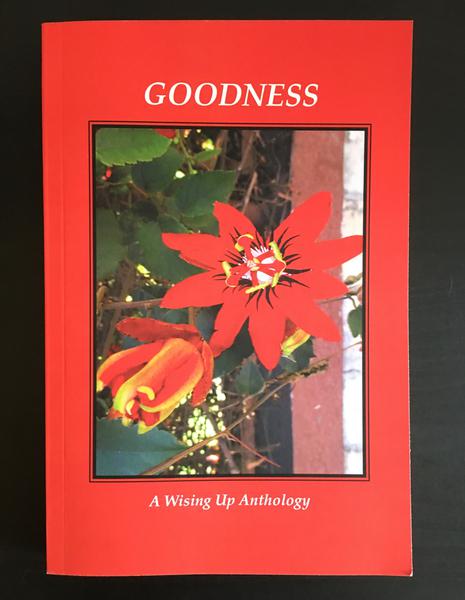
Yonn Ede Lot (2006-2012) Lamontay, Haiti — Engagement with Americans to see, participate, and engage with Haitians in a respectful, positive interaction, providing agency to all involved in the areas of agriculture, education, manufacturing, and public health. "Give & Take: Doing Our Damnedest NOT to be Another Charity in Haiti” published 2015.

Incarceration (2016) 
Illinois — Corresponded and visited "little brother" met in the Big Brother Program 35 years prior. Engaged in conversations with whites about the disproportionate incarceration of Black men. " The Crown Royal Affair" published 2020.

Women's Refugee Respite Center (2018) Chios, Greece — Volunteered at the Athena Center for Women, a respite space for women, primarily from Syria and Afghanistan, living in the refugee centers on Chios. Engaged women in conversation, some for the last eight years.

Engineers without Borders (2019) — Documented construction of bridges in two Guatemalan villages and numerous water projects north of Accra, Ghana. Wrote and photographed multi-cultural efforts placing posts and articles through social and traditional media to bring readers into contact with local people.

Women Engineering Students, Kwame Nkrumah University of Science & Technology (2019-2025) — Participant, three-day intensive workshop at  working with senior engineering students on verbal and written presentations. Engaged female students as part of international gender-equity program associated with the university workshop.

Economic Assistance Fund of the Southeast (2026) Lamontay and Jacmel, Haiti — Developed with local business professionals a fund for providing small, low-cost loans to local entrepreneurs.

Applicable articles written in response are featured below.

I grew up with parents who worked hard to instill in me a positive attitude toward people who are "different." Despite encountering deep-seated stigma, ignorance, and unconscious bias in others, I have found the best antidote is to engage in difficult conversations and share my stories, both written and oral, formally and informally. It is my hope that those simple actions can help reduce individual and collective negative outcomes. Working in collaboration appears to impact more quickly and effectively. 

My book documenting our experience in Haiti asked Haitians and foreigners alike: "Who gives and who takes, and what does each give and take?" One foreigner's answer captures the theme: "I took his smile with me from the island — I went to Haiti to teach something about progress, but certain Haitians were there to teach me about life."

Safe Water Network Partners with EWB-USA on Water Project in Ghana | Safe Water Network

The following content was contributed by J.O. Haselhoef on behalf of Engineers Without Borders-USA.

Linda Avadza walked the 500 yards with her baby still wrapped to her back to the water stand in her Labolabo, Ghana, neighborhood. She balanced an empty plastic bucket on her head, stepped onto the clean concrete pad, and affixed a round tag to the stand’s exterior. Within a moment, water gushed out of the overhead tap directly into her bucket. She stood there for just over a minute and knew from
Safe Water Network and EWB-USA Help Expand Knowledge of Top Ghana Engineering Students | Safe Water Network

The following content was contributed by J.O. Haselhoef on behalf of Engineers Without Borders-USA.

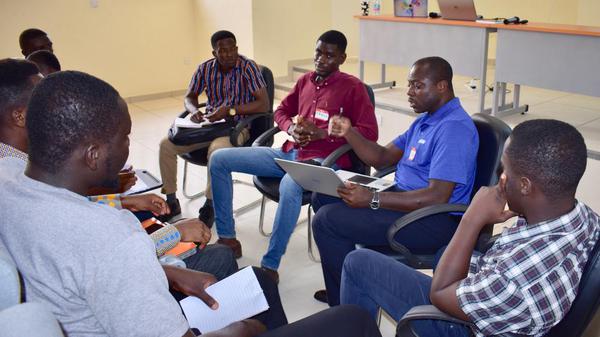
Safe Water Network joined with industry representatives in Ghana to challenge top engineering students—highly trained and strongly motivated—to address real-life challenges.

Eddie Doku, Director of Program Management at AECOM in Washington, D.C., led the effort. Doku was born in Ghana and has volunteered for Safe Water Network through its partnership with Engineers Without Borders-USA (EWB-USA).
Students showing the sign for 2020 International Women's Day

Strengthening STEM in Sub-Saharan Africa: Ghanaian Student Engineers Participate in Unique Gender Equality Program

This International Women’s Day, Engineers Without Borders USA is celebrating a unique program designed to further gender equity in engineering. SEESA (Strengthening Engineering Ecosystems in Sub-Saharan Africa) is a partnership between EWB-USA, Safe Water Network (SWN), Feminist Data Research (FDR), Inc., Kwame Nkrumah University of Science and Technology (KNUST), and AECOM. Providing student teams the opportunity to work with local industry professionals to develop and implement research and de